Introduction: Why So Many Homeowners Ask “Will Insurance Replace My Roof?”
If your roof has recently been damaged by wind, hail, heavy snow, fallen trees, or severe storms, you are probably asking the most important question: will insurance replace my roof?
This is one of the most searched roofing questions in the United States — and for good reason. A full roof replacement can cost anywhere from $8,000 to $30,000 or more depending on your home size, materials, labor market, and regional permit requirements. In areas with higher labor costs, that number can climb even further.
Understanding whether your homeowners insurance policy will cover that expense could save you thousands — or even tens of thousands — of dollars.
In this complete guide, we will explain in depth:
-
Does homeowners insurance cover roof replacement?
-
What qualifies under roof storm damage coverage?
-
The full roof insurance claim process
-
Insurance roof repair vs replacement decisions
-
Roof damage insurance approval tips
-
What to do if your claim is denied
-
How roof age affects payout
-
How contractors can help maximize approval
-
How deductibles, depreciation, and matching laws affect your outcome
Let’s break it down step by step.
What Is NOT Covered by Insurance?
Understanding exclusions is just as important as understanding coverage.
Insurance companies do NOT pay for:
-
Old age deterioration
-
Neglect or poor maintenance
-
Improper installation
-
Manufacturing defects
-
Mold from long-term leaks
-
Cosmetic damage only
-
Pest or animal damage
-
Gradual water intrusion
If your roof is 25–30 years old and leaking due to normal aging, insurance will likely deny replacement because that is considered predictable wear and tear.
This is why understanding the difference between damage vs deterioration is critical when asking, “will insurance replace my roof?”
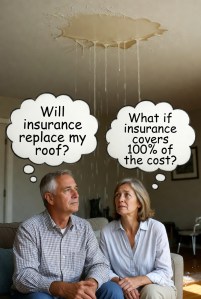
Will Insurance Replace My Roof or Just Repair It?
This depends entirely on the extent and type of damage.
Insurance companies decide between:
-
Insurance roof repair vs replacement
They do not automatically approve full replacement just because damage exists.
When They Approve Repairs
Insurance may approve partial repair when:
-
Only a small section is damaged
-
Limited shingle lift occurred
-
Flashing was slightly affected
-
No structural compromise exists
-
Matching materials are still available
In these cases, repair is considered sufficient to restore the roof to pre-loss condition.
When They Approve Full Replacement
Full replacement becomes more likely when:
-
Widespread hail impact exists
-
Multiple slopes are damaged
-
Shingles are discontinued and cannot match
-
Structural decking is compromised
-
Over 25–30% of one slope is damaged (varies by state building codes)
-
Underlayment is saturated or failing
-
Roof integrity has been significantly reduced
If the damage affects structural integrity or large areas, replacement becomes much more likely.
How Roof Age Affects Insurance Coverage
One of the biggest hidden factors in “will insurance replace my roof” is roof age.
Insurance companies classify roofs differently based on age brackets.
0–10 Years Old
-
Highest chance of full replacement approval
-
Usually covered at Replacement Cost Value (RCV)
-
Minimal depreciation applied
10–20 Years Old
-
May receive partial depreciation
-
More scrutiny during inspection
-
Adjuster evaluates maintenance records closely
20+ Years Old
-
Often switched to Actual Cash Value (ACV)
-
Lower payout due to depreciation
-
Higher likelihood of denial if wear and tear is evident
Some insurers now limit coverage after 15 years for asphalt shingles. Always review your declarations page carefully.
Understanding RCV vs ACV (Critical for Payout)
This distinction dramatically impacts how much money you receive.
Replacement Cost Value (RCV)
Insurance pays the full cost to replace your roof (minus deductible).
Depreciation is initially withheld but may be reimbursed after completion.
Actual Cash Value (ACV)
Insurance subtracts depreciation before payout.
Example:
Roof replacement cost = $15,000
Depreciation = $6,000
ACV payout = $9,000 (minus deductible)
This is why policy type matters significantly when asking, “does homeowners insurance cover roof replacement fully?”
The Complete Roof Insurance Claim Process
Understanding the roof insurance claim process increases your approval chances and reduces stress.
Step 1: Inspect Immediately After the Storm
Take photos and videos from ground level.
Document:
-
Hail dents
-
Debris impact
-
Damaged flashing
-
Interior ceiling leaks
-
Wet insulation
Do not climb the roof unless safe.
Step 2: Call a Professional Roofing Contractor
A licensed roofer can:
-
Identify storm damage
-
Provide written estimate
-
Take professional documentation photos
-
Check underlayment and decking
-
Meet with adjuster during inspection
Professional documentation strengthens your case.
Step 3: Contact Your Insurance Company
File claim promptly.
Most policies require reporting within 6–12 months, sometimes less.
Provide:
-
Date of storm
-
Description of damage
-
Photos
-
Contractor contact info
Step 4: Adjuster Inspection
The adjuster evaluates:
-
Cause of damage
-
Scope of damage
-
Roof age
-
Maintenance condition
-
Ventilation system
-
Decking condition
They determine whether roof storm damage coverage applies.
Step 5: Estimate & Settlement Offer
Insurance sends written summary including:
-
Approved repairs
-
Deductible
-
Depreciation
-
Final payout
-
Scope of work
Never accept blindly without reviewing carefully.
Westchester County & NYC Roof Insurance Guide: What Local Homeowners Must Know
Why Roof Insurance Claims Are Different in Westchester County & New York City
If you live in Westchester County or any of the five boroughs of New York City, your roof insurance situation is very different from homeowners in other parts of the country.
The combination of:
-
Nor’easters
-
Coastal storm systems
-
Heavy winter snow
-
Ice dam formation
-
Summer thunderstorms
-
Hurricane remnants
-
Dense urban construction
-
Strict building codes
creates a unique roofing and insurance environment.
That means when you ask, “will insurance replace my roof?”, the answer depends not only on your policy — but also on regional weather patterns, NYC building codes, labor costs, and material availability.
Let’s break down exactly what local homeowners need to understand.
Storm Patterns That Trigger Roof Insurance Claims in Westchester & NYC
Nor’easters and High Wind Events
Westchester County, Yonkers, the Bronx, and coastal NYC areas are frequently hit with Nor’easters. These storms bring:
-
Sustained winds above 40–60 mph
-
Wind gusts exceeding 70 mph
-
Heavy rain
-
Driving snow
High winds can:
-
Lift asphalt shingles
-
Break adhesive seals
-
Crack tabs
-
Tear ridge caps
-
Damage flashing around chimneys
Wind damage is one of the most common reasons insurance approves roof replacement in this region.
If multiple slopes are affected, insurance roof repair vs replacement decisions often lean toward full replacement.
Heavy Snow & Ice Dams
Homes in Westchester, White Plains, Scarsdale, New Rochelle, and northern Bronx areas frequently experience heavy snow loads.
When snow melts and refreezes at roof edges, it forms ice dams.
Ice dams can:
-
Force water under shingles
-
Saturate underlayment
-
Rot decking
-
Damage insulation
-
Cause interior ceiling stains
Some insurance policies cover sudden ice dam damage. Others may deny if they argue improper attic ventilation caused the issue.
This is where documentation and professional inspection become critical.
Hail Damage in Downstate New York
While hail is more common in central states, Westchester and NYC do experience hailstorms during summer thunderstorms.
Hail damage may not always be obvious from the ground.
Adjusters look for:
-
Granule loss
-
Circular bruising
-
Soft spots
-
Dented vents
-
Damaged flashing
Even moderate hail can significantly shorten the lifespan of asphalt shingles. Proper documentation increases approval chances under roof storm damage coverage.
Hurricane Remnants & Tropical Storm Systems
Even when hurricanes weaken before reaching New York, they often bring:
-
Torrential rain
-
Strong wind gusts
-
Debris impact
-
Tree damage
Falling branches and trees are common in tree-dense neighborhoods like Riverdale, Yonkers, and northern Westchester towns.
If a tree strikes your roof, insurance almost always covers the structural repair — including decking replacement if needed.
Building Codes in Westchester & NYC That Affect Insurance Payouts
When asking “will insurance replace my roof?”, many homeowners forget about local code requirements.
New York State and NYC building codes often require upgrades during roof replacement.
Ice & Water Shield Requirements
New York building code requires:
-
Ice and water barrier along eaves
-
Protection in valleys
-
Proper sealing around penetrations
If your older roof did not meet these standards, insurance may need to cover upgrades under ordinance and law coverage.
Always check whether your policy includes ordinance and law coverage.
Decking Replacement Standards
If roof decking is:
-
Rotting
-
Water damaged
-
Structurally weak
Local code may require full replacement before re-roofing.
Insurance may cover this if it’s tied to covered storm damage.
Permit & Inspection Costs
In NYC boroughs like:
-
Bronx
-
Manhattan
-
Queens
-
Brooklyn
Roof replacement often requires permits and inspections.
These additional costs are higher than suburban areas.
Insurance settlement should account for:
-
Permit fees
-
Code compliance
-
Required safety measures
Failure to include these line items can result in underpayment.
Insurance Claim Challenges Unique to NYC & Westchester
Higher Labor Costs
Roofing labor in New York City and Westchester is significantly higher than the national average.
If your insurance estimate uses generic national pricing software without local adjustment, your payout may be too low.
Always compare your contractor estimate to the insurance scope carefully.
Multi-Family and Brownstone Properties
In areas like:
-
Bronx
-
Upper Manhattan
-
Queens
-
Yonkers
Many homes are:
-
Attached
-
Semi-attached
-
Multi-family
-
Brownstones
Roof replacement in attached homes can complicate insurance roof repair vs replacement decisions.
Shared walls and slopes may require coordinated work. Insurance companies sometimes resist paying for connected sections.
Proper documentation is critical.
Older Housing Stock
Many homes in Westchester and NYC are 50–100 years old.
Older homes often have:
-
Multiple roofing layers
-
Outdated ventilation
-
Wood plank decking
-
Slate or specialty materials
Insurance companies scrutinize older roofs more aggressively.
Maintenance history becomes extremely important.
How Roof Age Impacts Westchester & NYC Claims
Because of harsh winters, roofs in New York often deteriorate faster than in milder climates.
A 20-year-old asphalt roof in Florida may still function well.
A 20-year-old asphalt roof in New York has endured:
-
Freeze-thaw cycles
-
Snow loads
-
Ice dam pressure
-
Wind-driven rain
This regional wear affects insurance decisions.
If storm damage is layered on top of aging shingles, adjusters may attempt to categorize it as wear and tear.
That’s why proper inspection is essential.
Deductibles in High-Value New York Homes
Westchester County has higher-than-average home values.
Many policies use percentage-based deductibles.
Example:
Home value: $800,000
2% wind deductible = $16,000
That means insurance only pays after $16,000 of damage.
Before filing a claim, confirm:
-
Flat deductible vs percentage
-
Separate wind/hail deductible
-
Hurricane deductible
Knowing this protects you from unnecessary claims.
Matching Issues in NYC Roofing Materials
Matching laws can strongly influence whether insurance replaces your roof fully.
In dense neighborhoods, older shingles are often discontinued.
If:
-
Color mismatch is severe
-
Material no longer manufactured
-
Repair would reduce property value
Insurance may need to replace the entire slope.
In historic districts, matching can become even more complex.
Historic Districts & Landmark Properties
In parts of:
-
Bronx
-
Upper Manhattan
-
Certain Westchester towns
Homes may be landmarked or in historic zones.
Roof materials may need to match specific guidelines (slate, copper, specialty shingles).
These materials cost significantly more.
Insurance may cover like-kind replacement depending on policy language.
Documentation and policy review are essential.
Insurance Denials in NYC: Common Patterns
Local homeowners frequently receive denial letters stating:
-
Damage due to age
-
Long-term deterioration
-
Insufficient storm evidence
-
Below deductible
If you believe denial is incorrect, you can:
-
Request reinspection
-
Provide contractor storm report
-
Provide NOAA weather data
-
Appeal in writing
-
Hire public adjuster if necessary
Many denials are overturned when professional documentation is provided.
How Contractors Help Maximize Local Insurance Payouts
A local, experienced roofing contractor can:
-
Identify regional storm damage patterns
-
Document ice dam effects
-
Understand NYC code requirements
-
Provide accurate Xactimate pricing
-
Request supplements for missed line items
-
Meet adjuster onsite
In Westchester and NYC, having a contractor present during inspection often increases accuracy.
Timing Your Claim in New York
Storm season peaks:
Winter: Snow & ice
Spring: Wind storms
Summer: Thunderstorms & hail
Fall: Hurricane remnants
Insurance policies have reporting deadlines.
Filing too late can result in denial.
After a major storm event, schedule inspection immediately.
Multi-Unit and Investment Properties
If you own:
-
Rental properties
-
Multi-family homes
-
Commercial mixed-use buildings
Insurance policies differ from standard homeowner policies.
Roof coverage may include:
-
Business interruption
-
Loss of rental income
-
Additional structural coverage
Understanding policy language is essential before filing.
Roof Replacement Costs in Westchester & NYC
Average roof replacement costs locally:
Small home: $12,000–$18,000
Mid-size home: $18,000–$28,000
Large home: $30,000+
Slate or specialty: $40,000+
Labor costs, permit fees, and material logistics drive prices higher than national averages.
This makes insurance coverage even more valuable.
Preventative Maintenance for Stronger Insurance Claims
To strengthen future claims:
-
Clean gutters regularly
-
Remove debris
-
Maintain attic ventilation
-
Repair minor flashing issues
-
Document annual inspections
Insurance companies favor homeowners who maintain their property responsibly.
When Should Westchester & NYC Homeowners File a Claim?
You should consider filing if:
-
Shingles are missing after windstorm
-
Tree branch damaged roof
-
Ceiling stains appear suddenly
-
Ice dam caused active leak
-
Multiple slopes show hail damage
Avoid filing if:
-
Damage below deductible
-
Minor cosmetic issue
-
Roof near end of life without storm event
Consult contractor first.
Final Local Answer: Will Insurance Replace My Roof in Westchester or NYC?
Yes — insurance can replace your roof locally if:
-
Damage was sudden
-
It resulted from covered storm event
-
Your roof was reasonably maintained
-
You filed within policy timeline
-
You provided documentation
However, New York-specific factors such as:
-
High deductibles
-
Strict building codes
-
Permit requirements
-
Older housing stock
-
High labor costs
make professional guidance especially important.
If you live in Westchester County or NYC and suspect storm damage, acting quickly and documenting thoroughly gives you the strongest chance of full approval.
Understanding local weather patterns, code requirements, and insurance procedures is the difference between partial payout and full roof replacement coverage.
Roof Damage Insurance Approval Tips (Very Important)
If you want a strong chance of approval, follow these roof damage insurance approval tips:
-
Document everything immediately.
-
Never delay filing claim.
-
Keep past repair receipts.
-
Have contractor present during inspection.
-
Compare contractor estimate vs insurance estimate.
-
Understand your deductible.
-
Check building code upgrade coverage.
-
Review for missing line items.
-
Request supplements if necessary.
Many claims get underpaid simply because homeowners accept the first offer without review.
What If Insurance Denies My Roof Claim?
If you’re told no, do not panic.
Common denial reasons:
-
“Wear and tear”
-
“Pre-existing damage”
-
“Damage below deductible”
-
“Cosmetic only”
-
“Insufficient evidence”
You can:
-
Request reinspection
-
Submit contractor damage report
-
File appeal with additional documentation
-
Provide weather data
-
Hire public adjuster (if needed)
Denials can often be reversed with proper evidence.
Does Homeowners Insurance Cover Roof Leaks?
Yes — but only if the leak was caused by a covered event.
Covered Example:
Storm rips shingles → water enters attic → ceiling stain
Insurance likely covers.
Not Covered Example:
10-year slow leak from worn flashing
Insurance likely denies.
Cause matters more than the leak itself.
Hail Damage and Insurance
Hail is one of the most common reasons insurance replaces roofs.
Adjusters look for:
-
Circular impact bruising
-
Granule loss
-
Soft spots in shingles
-
Metal vent dents
-
Cracked tabs
-
Broken ridge caps
Even if hail damage isn’t visibly obvious from the ground, it can shorten roof lifespan dramatically.
Wind Damage and Insurance
High winds can:
-
Lift shingles
-
Break seal strips
-
Crack tabs
-
Remove ridge caps
-
Damage flashing
-
Loosen fasteners
Wind damage often qualifies for replacement if multiple slopes are affected.
Ice and Snow Damage
In northern states, heavy snow and ice dams can:
-
Cause water backup
-
Rot decking
-
Damage insulation
-
Create structural load stress
-
Warp framing
Some policies cover this — others exclude ice dam damage if attic ventilation is poor.
Always verify your coverage details.

Deductibles and What You Pay
Even if insurance replaces your roof, you must pay your deductible.
Common deductibles:
-
$1,000 flat
-
1% of home value
-
2% wind/hail deductible
Example:
Home value $400,000
2% deductible = $8,000
Always confirm deductible before filing a claim to avoid surprises.
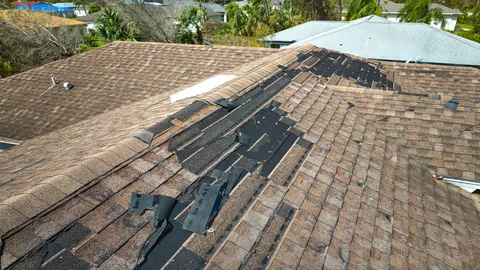
Matching Laws and Full Replacement
Some states have “matching laws.”
If shingles are discontinued and cannot be matched, insurance may have to replace entire slope or full roof.
This often turns small repair into full replacement approval.
Matching is a powerful factor in insurance roof repair vs replacement decisions.
When Should You NOT File a Claim?
Avoid filing if:
-
Damage is minimal
-
Repair cost under deductible
-
Roof extremely old
-
Unsure of cause
-
No storm event occurred
Too many small claims can affect premiums or renewal.
The Role of a Roofing Contractor During Insurance Claims
A qualified roofing contractor can:
-
Identify storm damage
-
Provide detailed Xactimate estimates
-
Meet adjuster onsite
-
Explain building code requirements
-
Assist in supplement requests
-
Document decking damage
-
Provide photo evidence
Professional documentation dramatically increases payout accuracy and fairness.
Can Insurance Cancel Me After Roof Claim?
They typically cannot cancel mid-policy for one legitimate claim.
However:
-
Premiums may increase
-
Non-renewal possible in high-risk states
-
Multiple claims raise risk profile
One legitimate storm claim usually does not cause cancellation.
How Long Does It Take for Insurance to Replace My Roof?
Typical timeline:
Claim filed → 1–3 days
Adjuster visit → 3–10 days
Estimate issued → 1–2 weeks
Contractor scheduling → 2–6 weeks
Final payment → After completion
Total time: 3–8 weeks average.
Complex claims may take longer.
Signs You Should Call for Inspection Immediately
-
Shingles in yard
-
Ceiling stains
-
Sagging roofline
-
Loud impact during hailstorm
-
Visible cracks or lifted edges
-
Granules in gutters
-
Flashing displacement
Quick action protects your coverage eligibility. Contact a licensed roofing contractor to perform roof inspection.
Frequently Asked Questions
Will insurance replace my roof if it is 20 years old?
Possibly, but depreciation may reduce payout significantly.
Does homeowners insurance cover roof replacement after hail?
Yes, if hail caused functional damage and not just cosmetic marks.
What if only one slope is damaged?
Insurance may approve partial replacement unless matching laws apply.
Can I choose my own contractor?
Yes. You are not required to use insurance’s preferred vendor.
Final Answer: Will Insurance Replace My Roof?
Yes — if:
-
Damage was sudden
-
It was caused by a covered peril
-
The roof was properly maintained
-
You file promptly
-
You document thoroughly
Insurance exists to protect homeowners from unexpected loss. But approval depends heavily on documentation, policy type, roof age, deductible, and damage scope.
Understanding the roof insurance claim process and following proven roof damage insurance approval tips significantly increases your chance of success.
The more informed you are, the better your outcome will be.
What Does Homeowners Insurance Actually Cover for Roof Damage?
Before answering “will insurance replace my roof,” you must understand what insurance is designed to do.
Homeowners insurance is built to cover sudden and accidental damage — not gradual deterioration or neglect.
Covered Events Usually Include:
-
Windstorms
-
Hail damage
-
Fire
-
Lightning strikes
-
Falling trees
-
Heavy snow collapse
-
Vandalism (in some cases)
-
Explosions
-
Sudden structural impact
This is known as roof storm damage coverage.
If your roof was perfectly fine yesterday and a storm tears off shingles today, you likely have a valid claim under a standard homeowners insurance policy.
Insurance companies expect your roof to be maintained reasonably well. If damage occurs from a sudden event, that is typically when coverage applies.
Local Homeowners & Property Insurance Agents in Yonkers, Westchester & Nearby Areas
If you need help with roof insurance claims, policy questions, or filing storm damage claims in Westchester County and New York City, here are some trusted local insurance agents and agencies you can contact:
• DC Ranieri Insurance Agency – A highly rated independent Yonkers insurance agency specializing in homeowners, property, and liability coverage. Call (914) 376‑2560 to get personalized home insurance support and claim assistance.
• Gotham Brokerage – Serving Rye Brook and Yonkers with comprehensive homeowners, condo, flood, and umbrella insurance options. They represent multiple carriers and can help you find coverage that works in storm-prone areas.
• DCAP Insurance – Yonkers-based insurance agency offering tailored property and casualty insurance policies, including homeowners insurance and claim guidance. Reach them at (914) 968‑7101.
• Consuelo Santiago‑Martinez – State Farm Insurance Agent – One of the top-rated State Farm agents in Yonkers offering homeowners and property insurance policies, plus claim support. Contact (914) 327‑2954 to explore coverages near you.
• Public Insurance Co NY – Local Yonkers insurance agency helping homeowners with property, liability, and comprehensive policy options. They are known for flexible service hours and responsive support — call (914) 303‑6125.
• Allstate Insurance: Debbie Stockton – Located in Bronxville, this Allstate agency offers homeowners, auto, and life insurance — including roof and property coverage options. Contact them at (914) 961‑7200 for a personalized quote.
• Liberty Mutual Home Insurance – Serving Yonkers, Liberty Mutual provides broad homeowners and property insurance products and claims support. Call (914) 670‑5942 to discuss roof insurance coverages and claim processes.
These licensed local agencies can help you compare policies, understand your roof insurance benefits, and assist you through the roof damage claim process — especially after wind, hail, storm, or impact damage.